OUTSIDE THE BOX

Celebrating America’s History via Technology
by Michelle Fitzhugh-Craig
Just about everyone likes to celebrate birthdays. They signify another trip around the sun, and when it is a milestone birthday, a party is often in order. There are some who would rather keep it low-key for one reason or another, but for me, it’s always been—at minimum—a day to smile, reflect, and be grateful for all of the good that is in my life, while setting aside all that’s not so great—for 24 hours, at least.
This summer, America will celebrate its 250th birthday. July 4, 2026, will take on a special meaning because there will be pomp and circumstance and an array of local, state, and federal events. Additionally, there will be various TV specials around the day, and we all are expected (OK, that may be too strong a word—how about encouraged?) to be proud citizens of the United States of America.
But we must be honest with ourselves. America hasn’t been as celebratory as we were on the 200th (yep, I remember it), and, sadly, many people say there hasn’t been a lot in the last 18 months to be proud about. As of this writing, our country is facing many challenges. We are involved in a war that—in my opinion—we should not be in. “Consumer prices rose 3.3% in March, the biggest yearly increase since May 2024, while new car prices were up 12.6% from a year ago,” according to an April 2026 PBS News article citing the U.S. Labor Department. Grocery prices continue to climb, USA TODAY notes. There also continues to be a partisan divide that is not closing quickly enough, and we are tired—tired of the chaos and confusion, as well as the cacophony of noise that we are experiencing, not just in this country, but around the world.
But I digress. And in doing so, I point out what I’m feeling, along with many people I know and much of the country: We just are not in a birthday party mood.
REMEMBERING HISTORY
Life is challenging in many areas these days, but the one thing we must not forget is that we are all Americans. And those who have come to this country (even without documents) are able to experience a rich history that needs to be remembered. We are a melting pot of cultures, races, ethnicities, ideas, faiths, philosophies, and more. Instead of blowing off this year’s birthday celebrations—like many did last year after the results of the presidential election … yeah, I said it—why not find the good in the things we are individually and collectively grateful for?
These days, I hear so much about what kind of country we will leave our children and grandchildren. So why don’t we make sure they know all of the positive, interesting, fun, and good things—as well as the not-so-pretty moments because of their historical accuracy—that keep us hopeful and determined to stand as one nation (under God, indivisible, with liberty and justice for all)? Thanks to technology, we have access to all of these at our fingertips. My hope is that using some of the suggestions in this column will help you and your loved ones appreciate the history we often take for granted.
HISTORICAL FICTION FOR ADULTS
Reading about our past can sometimes be boring. Depending on how long it’s been since you’ve sat in a history class, you may have forgotten much of it. A good way to jump back in is to pick up a novel. Publisher Penguin Random House provides a list of historical fiction books (New Historical Fiction to Read This Year) that it promises will transport you to another time. A couple that sound promising are Now I Surrender by Mexican writer Álvaro Enrigue, which “recasts the story of how the West was ‘won,’ ” and Fishbone Cinderella by Elizabeth Lim, the “riveting multi-generational saga” of a mother and daughter that begins in 1940s Hong Kong and travels to 1960 San Francisco.
HISTORICAL FICTION FOR TEENS
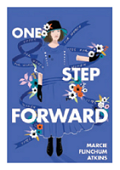 As a teacher, I know that presenting history to teens and young adults in a creative way can help them understand important parts of our country’s growth. In its list, SJPL Picks: YA Historical Fiction, the San Jose Public Library in California offers a diverse mix of books that demonstrate how our country broke barriers. Let’s look at two that are of interest. In One Step Forward, author Marcie Flinchum Atkins introduces readers to the “the youngest American suffragist imprisoned for picketing the White House to demand women’s right to vote.” This Terrible True Thing, by Jenny Laden, is about a teenage girl who, in 1991, learns her father is HIV-positive. What intrigues me most about this book is that Kirkus Reviews says it “feels like it was written in the ’90s and sat collecting dust until now.” As a teacher, I know that presenting history to teens and young adults in a creative way can help them understand important parts of our country’s growth. In its list, SJPL Picks: YA Historical Fiction, the San Jose Public Library in California offers a diverse mix of books that demonstrate how our country broke barriers. Let’s look at two that are of interest. In One Step Forward, author Marcie Flinchum Atkins introduces readers to the “the youngest American suffragist imprisoned for picketing the White House to demand women’s right to vote.” This Terrible True Thing, by Jenny Laden, is about a teenage girl who, in 1991, learns her father is HIV-positive. What intrigues me most about this book is that Kirkus Reviews says it “feels like it was written in the ’90s and sat collecting dust until now.”
HISTORY-FOCUSED GAMING
Teens/preteens and video games go hand in hand, so why not interest them in some online games and apps that give them a sense of our history? The following are a few curated sites that aim to teach both U.S. and world history in a fun, creative way:
- Legends of Learning’s Explore Middle School US History With Interactive Games
- MrNussbaum.com’s History Games
-
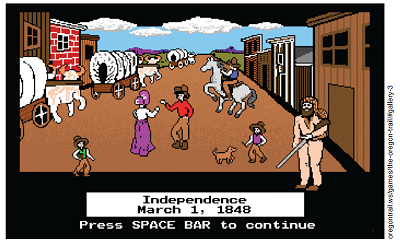 Mission US Mission US
- The Oregon Trail
If you’d rather play games the old-fashioned way, check out the curated list of history-themed board games from Tina’s Dynamic Homeschool Plus.
STREAMING SERIES
There is no shortage of educational streaming media these days. The following are some options to watch alone or with the entire family:
- High on the Hog: How African American Cuisine Transformed America—I watched this two-season Netflix documentary from 2021, and I can’t say enough about it. As a Black American, I learned things I had no idea about. The series is beautifully filmed and is rich in history through its portrayal of a diverse mix of chefs from the past and present.
- MagellanTV’s Curated Playlists—This resource offers an American Stories collection of series and films that look at some of the interesting people and moments from over the past 250 years.
|