WE THE PEOPLE
Hope Has a Physical Address
by Phil Shapiro
Public libraries are zones of possibility. When someone walks through a library’s doors, the odds quietly begin to tilt in their favor. Information resources and human resources sit side by side, ready to help people move forward on whatever goal brought them in that day. Community members rely on the judgment and skills of library workers. People who choose library work are committing themselves to using their minds for community uplift. That commitment shows up every day in small acts of guidance, encouragement, and problem solving.
When someone has a creative goal, helping them move forward often means helping them locate the missing pieces of a puzzle. Very often, the missing piece is another person with a complementary skill. In the internet age, that person does not need to live in the same town, state, or even country. A growing number of web services make it possible to hire skilled collaborators anywhere in the world at affordable rates. One such service is Upwork. It is useful for library workers to have at least some familiarity with platforms like this, because the future of work increasingly involves creating value by combining talents. Rarely does meaningful work happen in isolation. Most progress comes from finding people whose skills complement your own.
About 15 years ago, I had a positive experience hiring a freelancer through Upwork, which was then called Elance. I hired an animator in Bangladesh to animate a children’s story I had written. Their work was excellent, and the fee was affordable. The finished piece, Ordinary Mother, still exists online as a reminder of what thoughtful collaboration can produce.
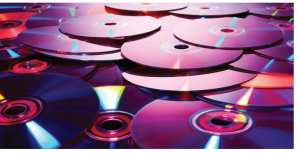
Fast-forward to the present. Someone recently asked if my library could use 100 blank DVDs. The easy answer would have been no. It would have been simple to say I could not think of a use for them. But the easy answer is not always the right one. I paused and said yes, trusting that I could figure out a way to turn those blank DVDs into something useful.
MY LITTLE FREE LITERACY DVD PROJECT
That decision began a small adventure: I had to figure out how to turn 100 blank DVDs into literacy. Fewer people own DVD players today, but millions of older laptops still have optical drives. If I created something useful, people would find a way to use it. If the finished DVD were placed in the public domain, communities could duplicate it freely. I could also distribute it through the Internet Archive at no cost.
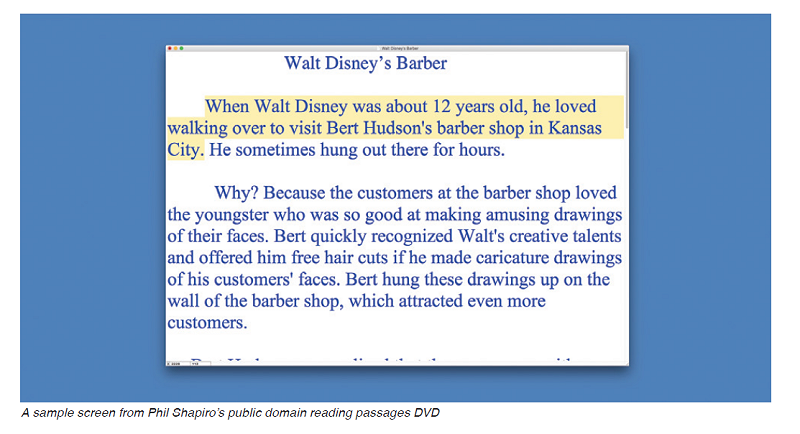
 The next step was finding free software to author a video DVD. Years ago, I would have used iDVD on my Mac, but that program is long gone. Instead, I found an excellent free alternative called DVDStyler. Before long, a literacy-focused video DVD was taking shape, along with this explanatory article for my column. At this point, I need to confess: I have the unusual hobby of writing reading passages for tests. My short pieces also appear in English-language textbooks in more than a dozen countries. The Educational Testing Service licenses my writings. For this current project, what I’m calling Little Free Literacy DVD, the missing piece was a professional narrator. I returned to Upwork and found a talented, affordable narrator in Texas who charged $25 an hour. I paid $100 for the narration of six passages and synchronized his voice with large-font video presentations of the text. This work is available on the project’s webpage. The next step was finding free software to author a video DVD. Years ago, I would have used iDVD on my Mac, but that program is long gone. Instead, I found an excellent free alternative called DVDStyler. Before long, a literacy-focused video DVD was taking shape, along with this explanatory article for my column. At this point, I need to confess: I have the unusual hobby of writing reading passages for tests. My short pieces also appear in English-language textbooks in more than a dozen countries. The Educational Testing Service licenses my writings. For this current project, what I’m calling Little Free Literacy DVD, the missing piece was a professional narrator. I returned to Upwork and found a talented, affordable narrator in Texas who charged $25 an hour. I paid $100 for the narration of six passages and synchronized his voice with large-font video presentations of the text. This work is available on the project’s webpage.
Because this was a volunteer project, I needed to cap my spending at that $100. I looked for a high-quality, free text-to-speech option for the remaining passages but ultimately chose a paid service, ElevenLabs, which I use for about $20 a month. I selected a voice called Relaxing Rachel, which speaks clearly and is pleasant to listen to.
A single video DVD can hold up to 2 hours of content, so selecting which pieces to include becomes an exercise in editing and curation, much like a band choosing songs for an album. The unused pieces are not wasted. All of the videos can live freely on YouTube, extending the reach of the work.
ADAPTATION
With projects like this, you never know how far they may travel. I created this resource for my own community, but as a free learning tool, it can move across borders. It might be useful in a school in eastern Uganda, for hospital patients in New Zealand, or for Peace Corps volunteers teaching English.
Although this project takes the form of a DVD, the content can easily be adapted. Audio CDs are one option. MP3 files are another. If a library were offered a box of old Android phones, volunteers could load them with audio stories and give them directly to English-language learners. No cataloging required. Someone waiting for a morning bus could listen and learn. With Google Translate, printed versions of the stories could be provided in a learner’s native language, making the English easier to follow.
BECOMING
Stories lead to more stories. Someone encountering this work may think, “If he can write stories, then I can write stories.” That spark matters.
All of this is to say that public libraries are places of becoming. Turning donated materials into learning tools sends a powerful signal that the library is ready to put its collective mind to work for the community. These efforts do not need to be staff-centered. Friends of the Library groups often contain remarkable talent. My own group includes Pulitzer Prize-winning authors and people who have built dozens of Little Free Libraries. If your library does not have a Friends group, partner with local nonprofits that want to contribute in meaningful ways.
Hope has a physical address. It is found in the public library branches in your town and in towns everywhere. Find ways, large and small, to be a beacon of that hope. When people walk through your doors, help them feel that the odds have shifted—and that something good awaits their curious mind. The library is not a place; it is an experience. Relish in crafting that experience. |